

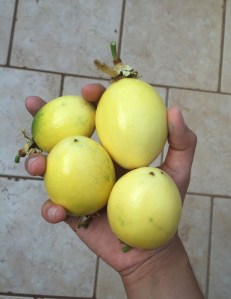
The passionfruit is native to Brazil but has been cultivated in copious tropical locations. Technically considered a berry, its firm shell and juicy, seedy interior is sweet and tangy. The passionfruit grows on a perennial vine, and is utilized for numerous culinary purposes such as desserts, toppings, and marinades.
My family has visited Maui, Hawaii ten consecutive February’s in a row. Although it’s usually just my parents, sometimes my siblings are able to join them if our schedules permit. Often times, our presence in Hawaii is staggered throughout the month, but every now and then, we find our entire family unit squished around a small dinner table to indulge in a barbeque dinner my dad cooked while wine-drunk.
Our condo we rent is located on South Kihei road. It is a road I have walked (and sometimes ran) many times over the past decade. If I head north, there are shops and restaurants. Among them is an opening with trees and shrubbery. Among the trees and shrubbery is one large tree, with branches hanging over the sidewalk, providing a sliver of shade and relief from the intense tropical sun.
Winding up the tree are passionfruit vines, or as they are known in Hawaii, “lilko’i.” Admittedly, it took a few years to figure out they were even there. Once we did, it became a like a game or challenge, to see if there were any new unclaimed fruits that had fallen. Sometimes my mom would bring home an entire bag full of them, and we could eat them with our oatmeal for the entire week. Other times, they were all gone.
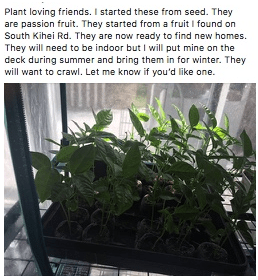
In what would have been to the dismay of the TSA, my mother smuggled home seeds, from one of the liliko’i we found from that tree. She assembled her gardening supplies, seeds, and began her attempt at cultivating tropical fruit in the dead of a Saskatchewan winter.
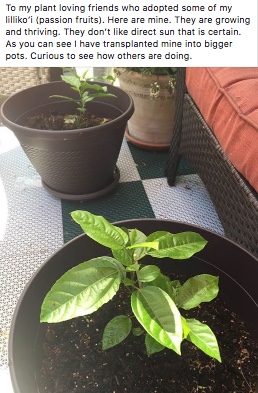
I was skeptical that the seeds would even sprout. With a frigid journey home, and an environment incompatible with (tropical fruit) life, there should have been no way the lilko’I would grow. The majority of the seeds did begin to sprout and those that did not were discarded. Then, they started to get bigger. She ended up putting out an adoption notice on Facebook:
Time elapsed. The snow melted…and then fell again…and melted. I passed all of my classes, went on trips, ran my first race, finished my electives, went camping, and turned 21. I learned guitar, got new tattoos, screamed my favourite songs in my car, laughed with friends, and felt alright.
As summer ended, and I began my fourth and final year of my undergrad, leaves turned, and the temperatures dropped. The liliko’I had to be moved inside from their temporary home in the backyard. They were massive. The vines, now beginning to outgrow their pots, were climbing up the wall, reaching their tendrils to grasp all, and any sources of stability- including each other. My kitchen looks like a jungle, full of winding vines, and dark green leaves.

We all grew to love the liliko’I for qualities beyond taste and texture, but rather what they represented. Unity, luck, joy, perseverance- they were a funny little fruit that became embedded in our favourite family memories of Hawaii- and now, home. I sit beside them every morning while I eat breakfast. From their genesis as illegal seeds in February, they have become strong, enormous, and profuse….
And perhaps, so did I.
-Madeline
 THE CLASSIC MONDAY BLOG